Veterans and athletes share a hidden problem: a body trained for threat, living in a world that no longer requires it. A practical look at somatic regulation and the polyvagal perspective.
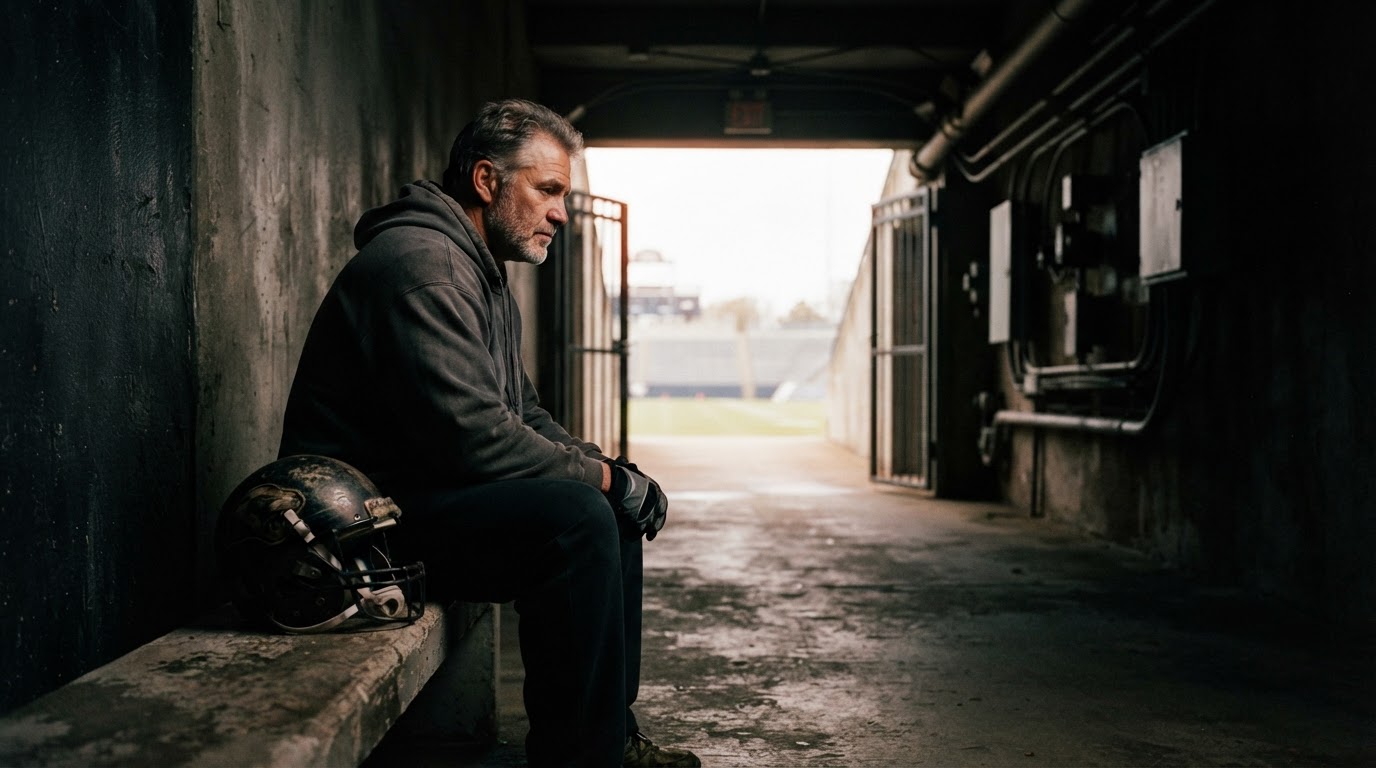
A combat veteran and a retired linebacker may seem like an unlikely pairing, but from a nervous-system perspective they have more in common than either would guess. Both spent formative years in environments where threat detection was not a nuisance but a survival skill — and both, upon leaving that environment, discovered that the skill didn't come with an off switch.
The body that learned to stay ready
The autonomic nervous system is adaptive. When a person repeatedly lives in high-stakes conditions, the system learns to default to a protective state: heightened vigilance, elevated baseline arousal, a body that scans rooms and crowds without being asked to. This is not a flaw. It is the same machinery that kept that person alive or performing at an elite level for years.
The same machinery that kept you alive or elite for years doesn't come with an off switch.
The problem is that the conditions changed and the system didn't get the memo. A grocery store aisle is not a combat patrol. A Sunday afternoon is not a game day. But the body can't tell the difference, because the nervous system responds to felt safety, not to logic — and felt safety is exactly what high-arousal training erodes.
Why 'just relax' is bad advice
Telling a dysregulated nervous system to calm down is like telling a muscle in spasm to let go. The instruction is correct; the mechanism is missing. This is where somatic and polyvagal-informed approaches come in. Rather than working from the top down — trying to think your way into calm — they work from the body up, using breath, posture, movement, and presence to give the autonomic system the cues of safety it was trained to wait for.
The polyvagal perspective, developed by neuroscientist Stephen Porges, describes how the vagus nerve mediates between mobilization and social engagement. When that system is stuck in fight-or-flight, connection feels unsafe and rest feels like vulnerability. Regulation isn't about becoming limp; it's about expanding the range — the ability to mobilize when needed and to genuinely settle when not.
From surviving to living
For veterans and retired athletes alike, the goal of somatic work is not to erase the protective wiring that was earned at real cost. It is to restore choice. To be able to walk into a room and let your shoulders drop. To sleep without one ear open. To be present with a partner without the background hum of a body still on patrol or on the field.
It is slow work, and it is honest work. But the body that learned to stay ready is also capable of learning, at the same patient pace, how to rest. The nervous system may not retire — but it can renegotiate the terms of its employment. And that renegotiation is where a genuinely civilian, genuinely present life becomes possible again.
About this article
Adia Naba, LCSW-S is a Licensed Clinical Social Worker and Board-Approved Supervisor (LCSW-S) practicing in The Woodlands, Texas, with statewide telehealth. Her clinical focus is trauma-informed care for retired athletes, military veterans, and individuals navigating complex trauma and identity transition.
This article is provided for educational purposes and is not a substitute for individualized clinical advice or treatment. For a confidential consultation, request a free 15-minute call.