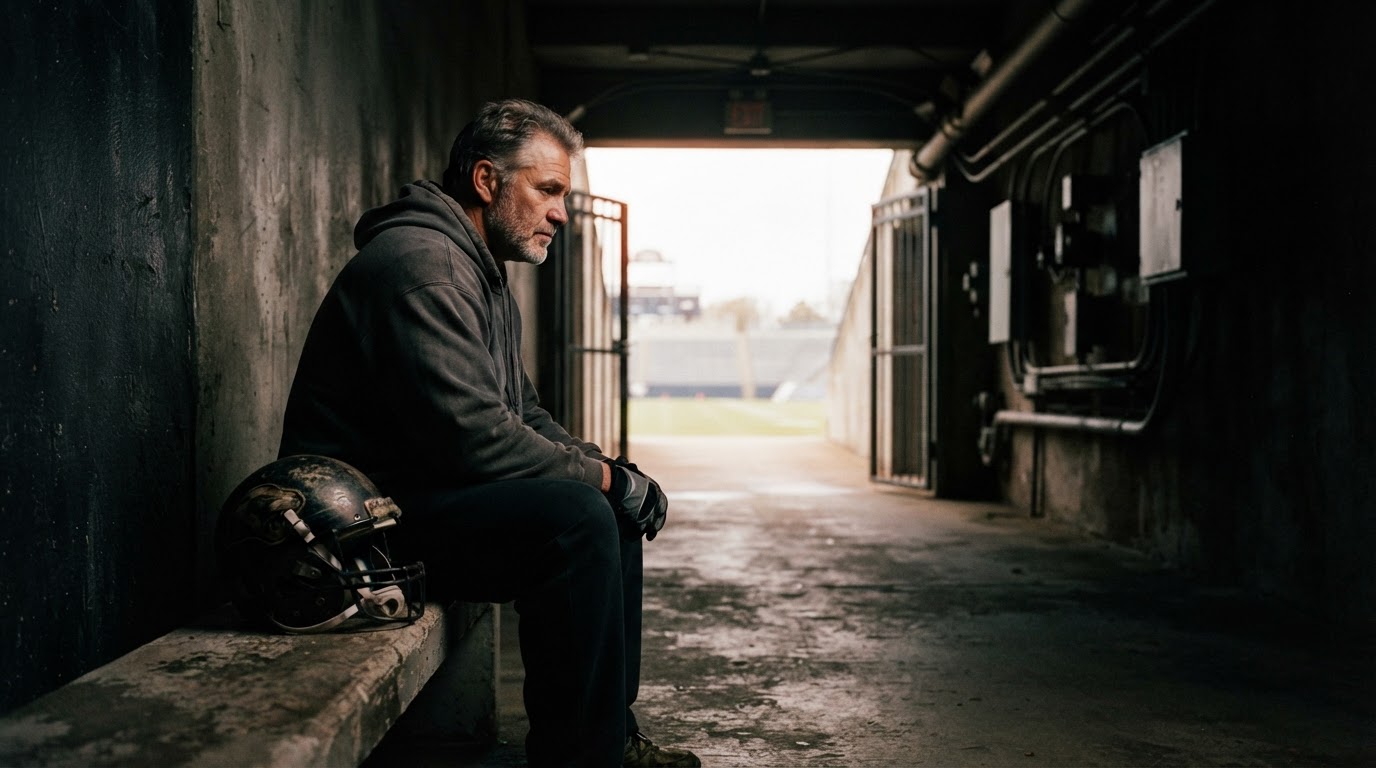
Retirement from elite sport is its own kind of trauma. Here's how eye movement desensitization and reprocessing is helping former athletes quiet the noise their nervous systems never got to discharge.
When a professional athlete retires, the public conversation tends to focus on legacy, statistics, and what comes next professionally. What rarely gets discussed is what happens to the nervous system. For years, that body was trained to live in a state of high arousal — anticipation, aggression, split-second threat detection, and the constant flood of adrenaline that competition demands.
Then, suddenly, it's over. The stadium empties. The schedule that gave every day its structure disappears. And the athlete is left holding a nervous system still tuned for a life that no longer exists.
Retirement as a nervous system event
From a clinical standpoint, athletic retirement is not just a career transition — it is a regulatory event. The fight-or-flight system that was activated daily doesn't simply switch off because the whistle blew for the last time. Many former athletes describe a persistent hum: restlessness, irritability, difficulty sleeping, an odd emptiness that has nothing to do with sadness and everything to do with a body still waiting for the next play.
This is where talk therapy often stalls. Explaining how you feel is useful, but it does not rewire the autonomic patterns that were built over years of high-stakes performance. That rewiring requires accessing the part of the brain where those patterns actually live.
Explaining how you feel is useful. It does not rewire the autonomic patterns built over years of high-stakes performance.
How EMDR works
EMDR — Eye Movement Desensitization and Reprocessing — is a structured, evidence-based approach that uses bilateral stimulation (typically guided eye movements, alternating tones, or tactile tapping) to help the brain reprocess material that has become 'stuck.' Originally developed for post-traumatic stress, its applications have broadened considerably. It is now widely used for the kind of identity-level disorientation that follows major life transitions, including the end of an athletic career.
The mechanism is straightforward in concept: by keeping the brain lightly occupied with bilateral input while a difficult memory or association is held in mind, the emotional charge attached to that material tends to reduce. The memory doesn't disappear. It simply stops feeling like it's happening right now. It moves, in the language of the field, from 'hot' to 'cold.'
Why it resonates with athletes
There are a few reasons EMDR in particular lands well with former competitors. First, it doesn't require a long retelling of painful events. Many athletes have already learned to compartmentalize; being forced to narrate every injury, loss, or moment of public scrutiny can feel like another form of exposure they didn't sign up for. EMDR allows the reprocessing to happen at a pace and depth the client controls.
Second, it respects the protective parts. A clinician trained in parts-aware, somatic-informed work doesn't try to strip away the drive or the discipline that made the athlete successful. The goal is integration — helping the nervous system distinguish between a stadium in October and a kitchen in March — not erasure.
What changes
Clients often describe the shift in small, concrete terms first: sleep that actually rests them, a quieter chest, the ability to sit through a Sunday without feeling like they should be somewhere doing something. From that baseline of regulation, the larger questions — who am I now, what do I want — become answerable rather than overwhelming.
Therapy is not a retirement plan, and EMDR is not a magic switch. But for former athletes carrying a decade of un-discharged arousal in a body that was never meant to stay that calm or that wired forever, it is one of the more effective tools we have. The goal was never to become someone new. It is to let the person who was always in there finally come down off the line.
About this article
Adia Naba, LCSW-S is a Licensed Clinical Social Worker and Board-Approved Supervisor (LCSW-S) practicing in The Woodlands, Texas, with statewide telehealth. Her clinical focus is trauma-informed care for retired athletes, military veterans, and individuals navigating complex trauma and identity transition.
This article is provided for educational purposes and is not a substitute for individualized clinical advice or treatment. For a confidential consultation, request a free 15-minute call.